

Article
MaxDiff Question
When and Why to Use
Use this to identify the most and least preferred items from a set. It's ideal for:
- Prioritizing features, messages, or concepts
- Understanding tradeoffs in preferences
- Reducing scale bias compared to traditional rating questions
Supports full MaxDiff logic with dynamic sets, randomization, and chat and traditional display styles.
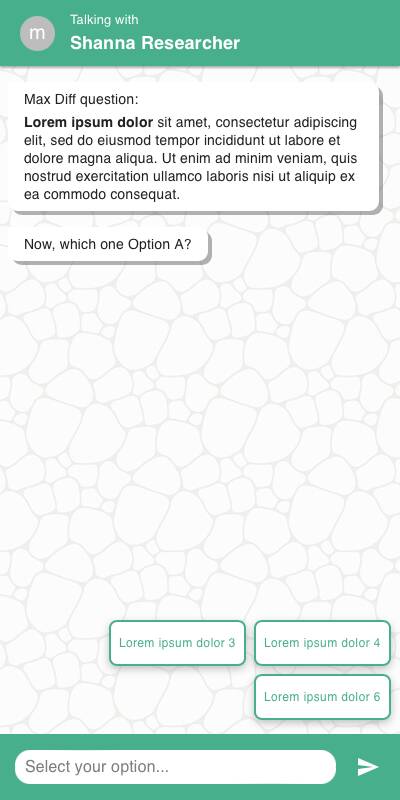
Chat Experience
- Respondents answer twice per set: once for each label (e.g. "Least" and "Most")
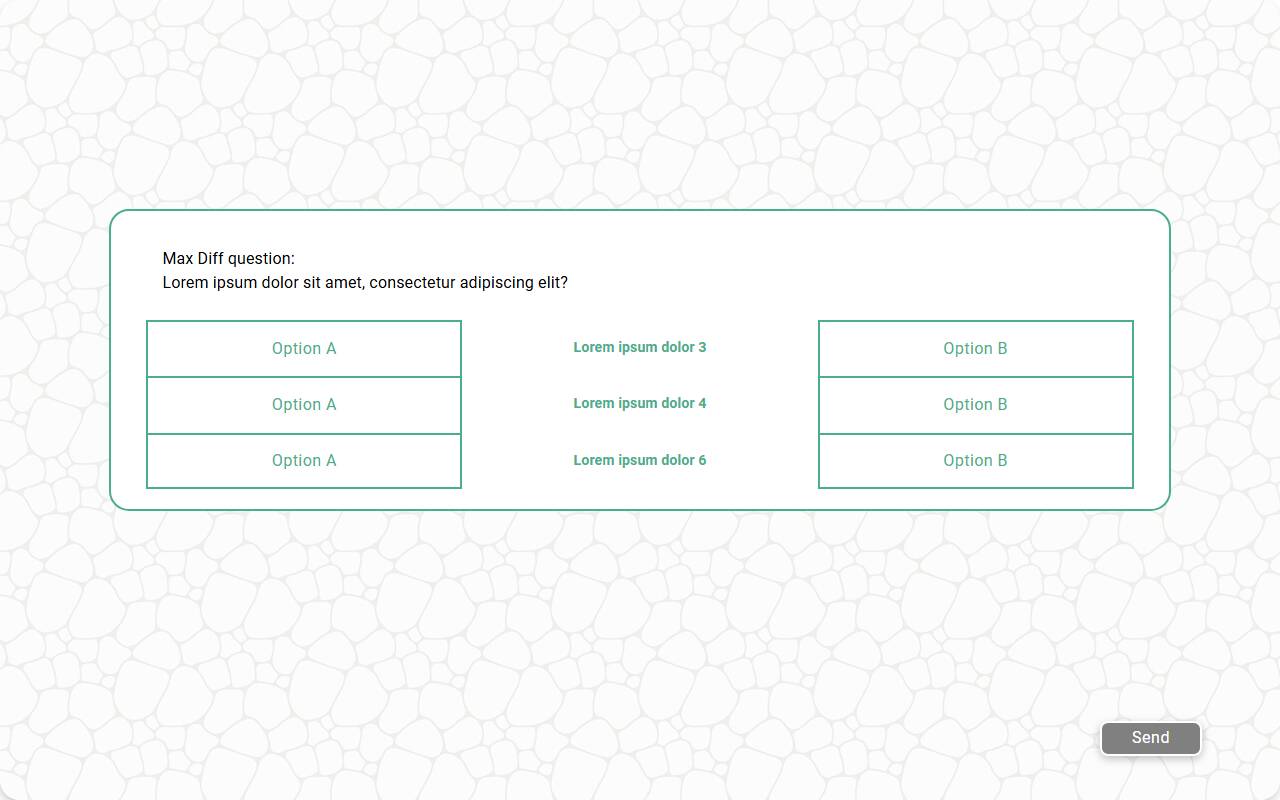
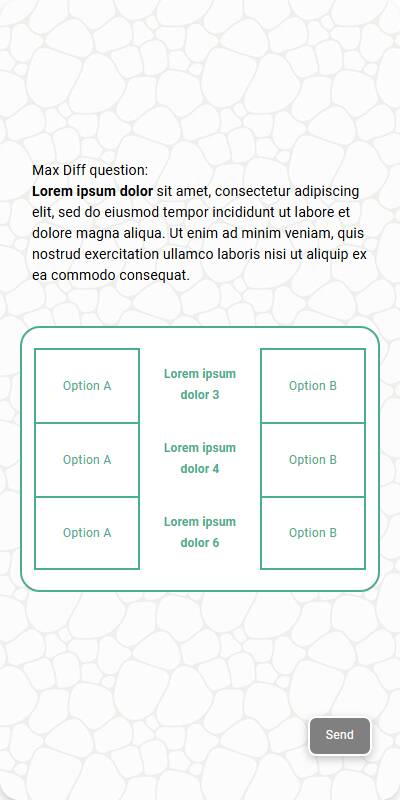
Traditional Experience
- Each set is shown once with both labels side by side (e.g. "Select Least and Most")
- Ideal for desktop or larger screen interactions
| Chat experience | Traditional experience | Traditional experience on mobile |
|---|---|---|
 |  |  |
Configuration Options
| Option | Type | Required | Default | Description |
|---|---|---|---|---|
| question | string | yes | - | Prompt shown above the MaxDiff sets |
| items | List[str] or List[List[str]] | yes | - | Flat list (auto-generated sets) or custom list of sets |
| labels | List[str] | yes | - | Two labels for the selection ends (e.g. ["Least", "Most"]) |
| image | MediaItem | no | - | Optional image shown above the sets |
| randomize | bool | no | False | Randomize item order per set |
| custom_validator | `Callable[[Dict], str | None]` | no | - |
| dont_know_option | str | no | - | Optionally adds a "Don't know" choice |
tags | s.tag() | no | - | Used for substitution and grouping in reporting |
Example Code
Simple list with auto-generated sets:
car_brands = ["Ford", "Toyota", "Honda", "Tesla", "BMW", "Audi"] s.max_diff_question( "Which of the following car brands do you prefer?", items=car_brands, labels=["Least", "Most"] )
Chat version with label substitution:
s.max_diff_question( "Which of the following cars do you prefer the **{label}**?", items=["Ford", "Toyota", "Honda", "Tesla"], labels=["Least", "Most"] )
Custom sets and tag substitution:
for brand in ["Ford", "Toyota"]: s.max_diff_question( f"Which of the following {brand} cars do you prefer?", items=[["Focus", "Fiesta", "Mustang"], ["Fusion", "Explorer", "Escape"]], labels=["Least", "Most"], s.tag(brand=brand ))
Notes
- If
itemsis a flat list, sets are generated automatically - For chat layouts, always include
{label}in your question text - Responses are returned as a dictionary per set with selected values for each label
- Use
custom_validatorfor logic like ensuring diversity across sets or detecting straight-lining