

Article
Grid Rating Question
When and Why to Use
Use this to capture numeric or labeled ratings across multiple items in a structured format. It's useful for:
- Performance, satisfaction, or quality ratings
- Comparing several attributes on a common scale
- Collecting fine-grained opinion data
Supports sliders, buttons, and star ratings with configurable point labels.
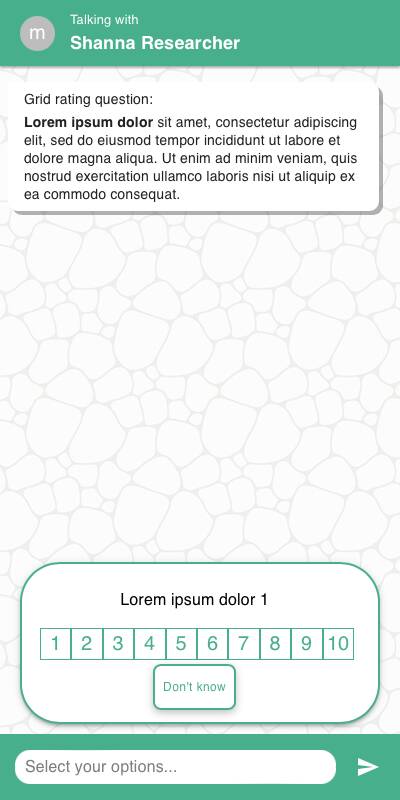
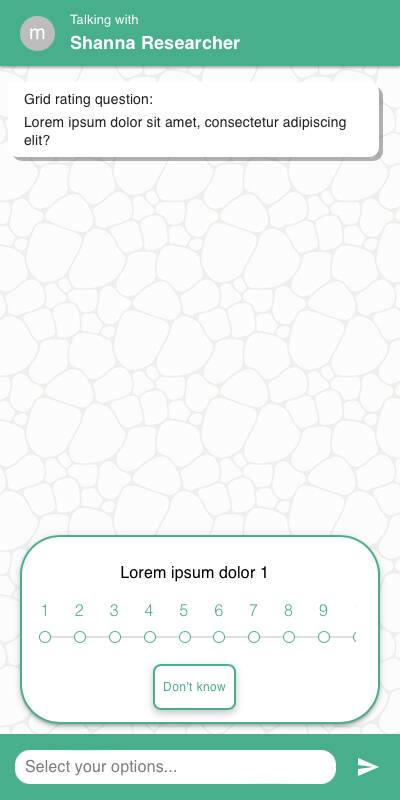
Chat Style
- Each row is presented individually with a rating interface (slider, star, or button)
- User can scroll vertically through rows
- Labels and anchors are shown depending on the
labelsconfig
| Button style | Slider style | Star style with an image |
|---|---|---|
 |  |  |
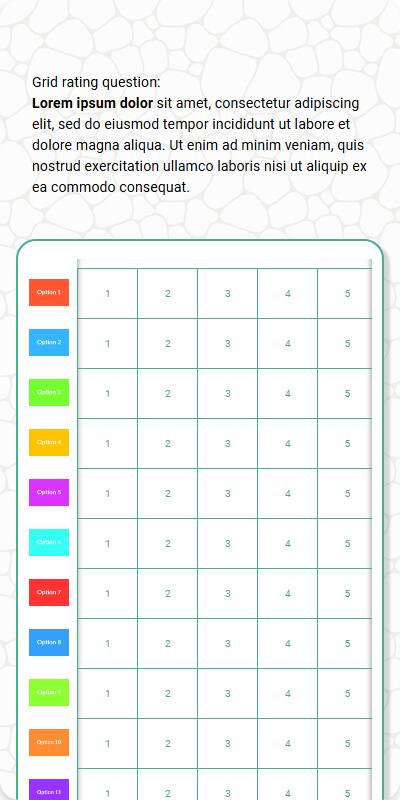
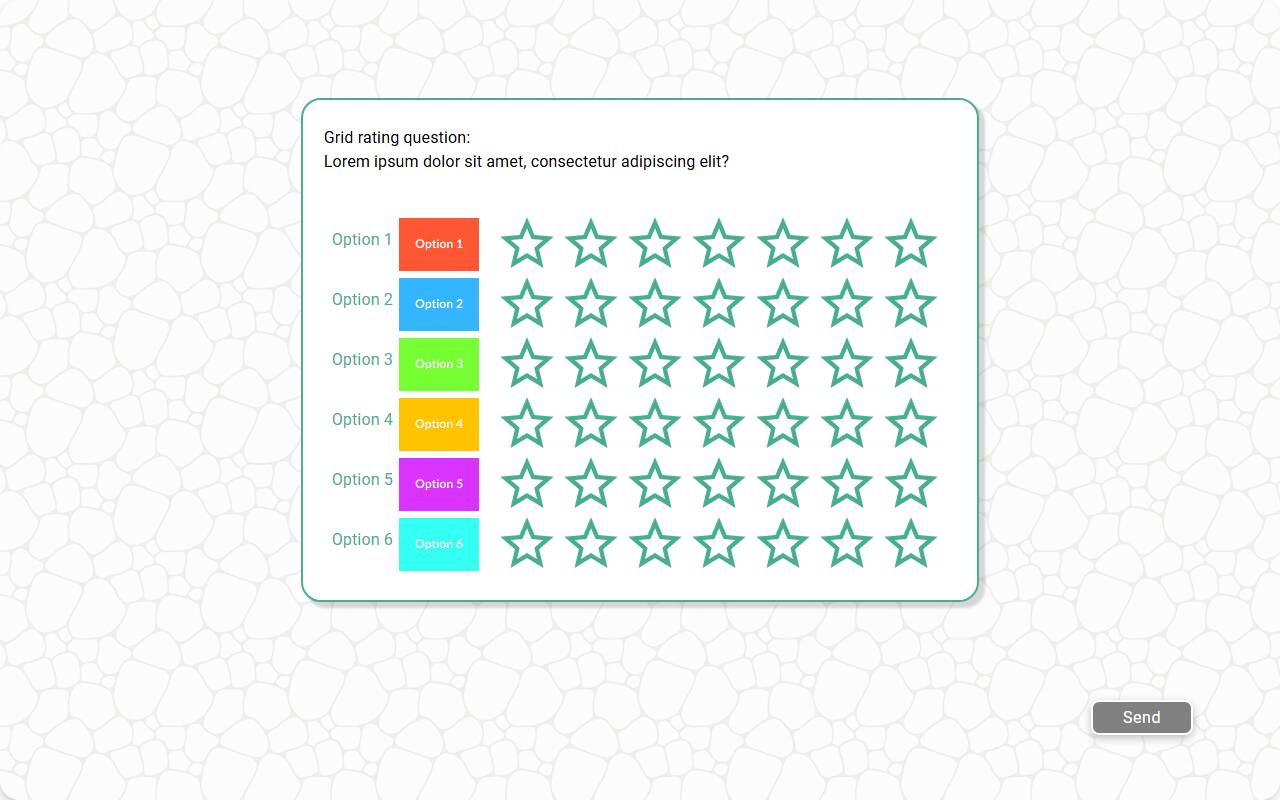
Traditional Experience
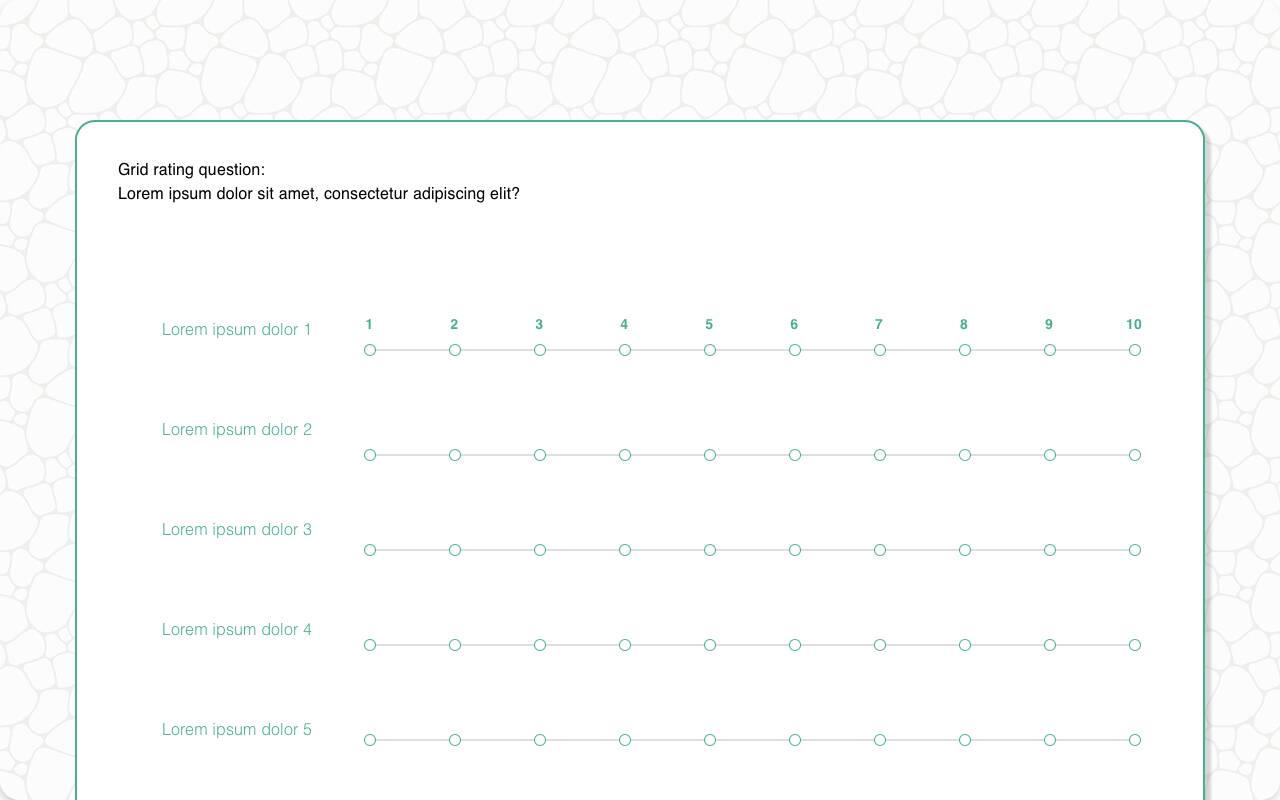
- Grid layout with rows as items and ratings as columns
- Ratings are input inline per row
- Star and slider styles are fully supported
| Button style, mobile optimized | Star style with images | Slider style |
|---|---|---|
 |  |  |
Configuration Options
| Option | Type | Required | Default | Description |
|---|---|---|---|---|
question | string | yes | - | The prompt shown to the user |
rows | `List[str | MediaItem]` | yes | - |
row_name | string | yes | - | Used in reporting structure |
image | MediaItem | no | - | Top-level image shown above the question |
number_of_points | int | no | 5 | Number of rating points |
first_point | int | no | 1 or first label | First point on the scale |
labels | Dict[int, str] | no | - | Custom labels for scale points |
style | string | no | slider | One of "slider", "button", or "star" |
randomize | bool | no | False | Whether to randomize row order |
recodes | Dict[str, str] | no | - | Optional recoding of rating values |
dont_know_option | str | no | "" | Optional "Don't know" fallback |
skip_empty | bool | no | False | Skip question if no rows provided |
default | Dict[str, int] | no | random | Test data defaults per row |
custom_validator | `Callable[[Dict[str, int]], str | None]` | no | - |
image_label_field | str | no | - | Field used for row image labels |
show_image_label | bool | no | True | Show/hide row image labels |
image_size | Tuple[int, int] | no | - | Size to render row images |
tags | s.tag() | no | - | For reporting and text substitution |
Example Code
Basic usage:
s.grid_rating_question( "Please rate the following aspects of the product", rows=["Quality", "Price", "Service", "Delivery"], row_name="Product Aspect", number_of_points=5 )
With custom labels and recodes:
s.grid_rating_question( "How would you rate these aspects?", rows=["Speed", "Design"], row_name="Attribute", number_of_points=5, labels={ 1: "Very Poor", 3: "Neutral", 5: "Excellent" }, recodes={ "1": "Low", "2": "Low", "3": "Mid", "4": "High", "5": "High" } )
With star style and default values:
s.grid_rating_question( "Please rate your satisfaction with each brand", rows=["Brand A", "Brand B"], row_name="Brand", style="star", number_of_points=5, default={"Brand A": 4, "Brand B": 5} )
Notes
style="slider"shows an interactive scale; usebuttonfor tap options orstarfor visual flairlabelscan help orient respondents, especially on non-obvious scalescustom_validatorcan enforce variation or prevent straight-lining