Audience needs and motivations
Understand audience needs and motivations beyond the segments in your media dashboard, and bring them into the brief.

Understand your audience, test messages and creative, and measure brand lift with real respondents.
Run each study in the MX8 Labs Research Platform, with your own questions, secure video, MaxDiff, conjoint and live dial feedback.
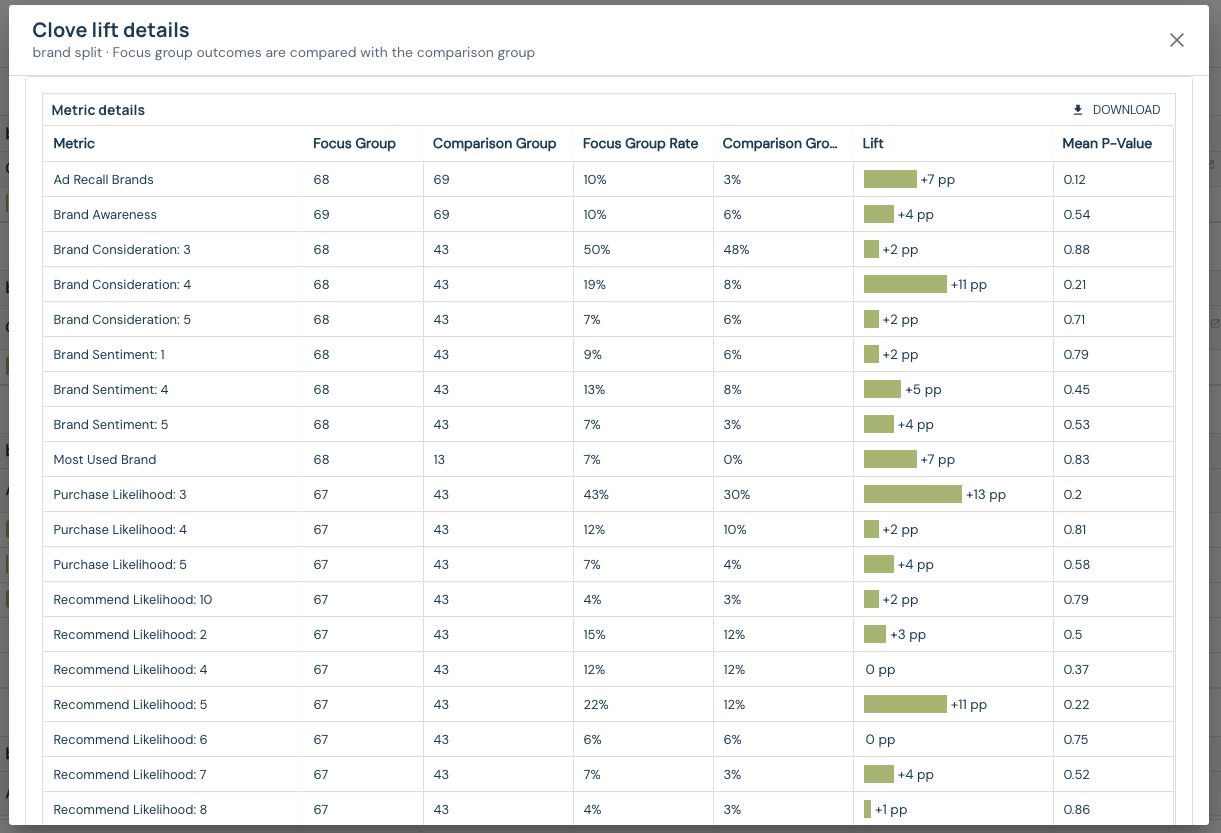
See exposed and control group counts, response rates, lift and statistical results together.
See lift report setup and outputsPerformance data shows what happened. Research adds what people think, need, and understand, so your team can build a stronger brief, make a creative recommendation, or explain campaign results.
Understand audience needs and motivations beyond the segments in your media dashboard, and bring them into the brief.
Test claims, concepts, and creative before committing production or media budget.
Measure awareness, perception, and intent alongside campaign performance, and bring the findings to the client conversation.
Bring real respondent feedback into strategy, creative development, and campaign measurement. Automated research production helps your team get from the question to the findings with fewer hand-offs.
Program your own questions and routing. Recruit through integrated panels, your sample partners or first-party lists.
Explore campaign workflows →Use MaxDiff to prioritize claims or conjoint to test combinations of attributes, with design tools and analysis in the same platform.
Message and concept testing →Enable content protections and add a dial to capture reactions as respondents watch.
Copy and creative testing →Configure exposed and control groups, choose outcomes and review lift by audience.
Brand lift →From the first audience brief to post-launch measurement, run each study with the questions and comparisons it needs.
Explore category needs, purchase drivers and motivations with your own questions and routing. Compare the answers across the audiences the campaign needs to reach.
Use MaxDiff to prioritize a shortlist of claims, or conjoint to explore combinations of offer attributes. Review preferences within the audiences that matter to the brief.
Enable video protections and use a live reaction dial to compare responses during playback. Add questions on clarity, relevance and brand recall before committing production or media budget.
Ask what people understood, which claims they believed and what made them hesitate. Compare the answers by audience before revising the next version.
Compare awareness, perceptions and intent between exposure groups. Choose outcomes and comparison groups before fielding, then review lift by audience against the limits of the study design.
Build studies around usage, satisfaction and reasons for leaving. Use routing to follow up on answers and compare customers with different purchase histories.
AI programs surveys, codes open ends and drafts reports. Your team chooses the research design, checks the analysis and makes the client recommendations.
Explore the research platform
Survey automation
Automated programming, QA, data processing, and report drafts give your team more capacity for client work.
Real respondents
Declared answers from respondents, with Synthetic Twins only where they extend real data.
Reporting and exports
Compare audience groups, inspect coded open ends and export the results from the same project.
“All we need is the data.”
Start with the question your team needs to answer, then agree the audience, comparisons, and deadline.
Bring the brief, questionnaire, assets, and eligibility criteria. Use your own lists or sample partners, or recruit through integrated panels. Plan each comparison group before fielding.
Check the programmed questions, logic, and asset presentation. Timing depends on recruitment, quotas, survey length, and the sample needed; early responses may not support a decision yet.
Review segment comparisons, coded open ends, and report drafts. Export the data or presentation, check the conclusions, and prepare the client recommendation.
See the sourcing guide, reporting workflow, and brand lift method. Quotes depend on survey length and respondent count, with no seat or feature fees and separate sample or data-ingestion costs where applicable.
Illustrative study: a team has two benefit-led messages for a new product. Recruit the intended buyers, compare understanding and relevance, and ask what each message means to them. If the preferred message works only in one priority segment, use that finding to focus the brief and plan the next test. Stated preference is not a sales forecast.
Use concept testing before production and creative testing before launch. After launch, use brand lift studies to compare exposure groups and brand tracking software to follow brand health over time. Run ad testing for agencies from the early brief to the client presentation.
The ad-tech-to-research translation guide connects familiar campaign metrics to research questions. For choosing which variants to test, read the combinatorial trap of A/B testing.
AI programs surveys, codes open ends and drafts reports. Your team chooses the research design, checks the analysis and makes the client recommendations.
Bring the decision, questionnaire or brief, audience criteria, assets where relevant, and deadline. Use first-party lists or existing sample partners, or recruit through integrated panels. Plan the sample for each comparison group and review the programmed study before launch.
Timing depends on audience availability, survey length, quotas, the sample needed, and review. Results update as responses arrive, but early responses may not support the comparisons you need. Agree the fieldwork plan and decision deadline before launch.
Quotes depend on survey length and respondent count, with no seat or feature fees. Account for sample costs and additional data-ingestion fees where used. Start with the decision and required comparison groups, then agree the scope and quote before fielding.
Bring an audience, message, or creative question and see the workflow from questionnaire to report.