Brand lift & incrementality

Measure brand lift while your campaign is running.

Survey-based brand lift compares awareness, consideration, and intent between people exposed to your campaign and matched controls. MX8 Labs updates the results as responses arrive, so you can assess performance during the campaign. The study design determines whether those differences support a causal claim or show an association.

What a brand lift study measures

Brand outcomes

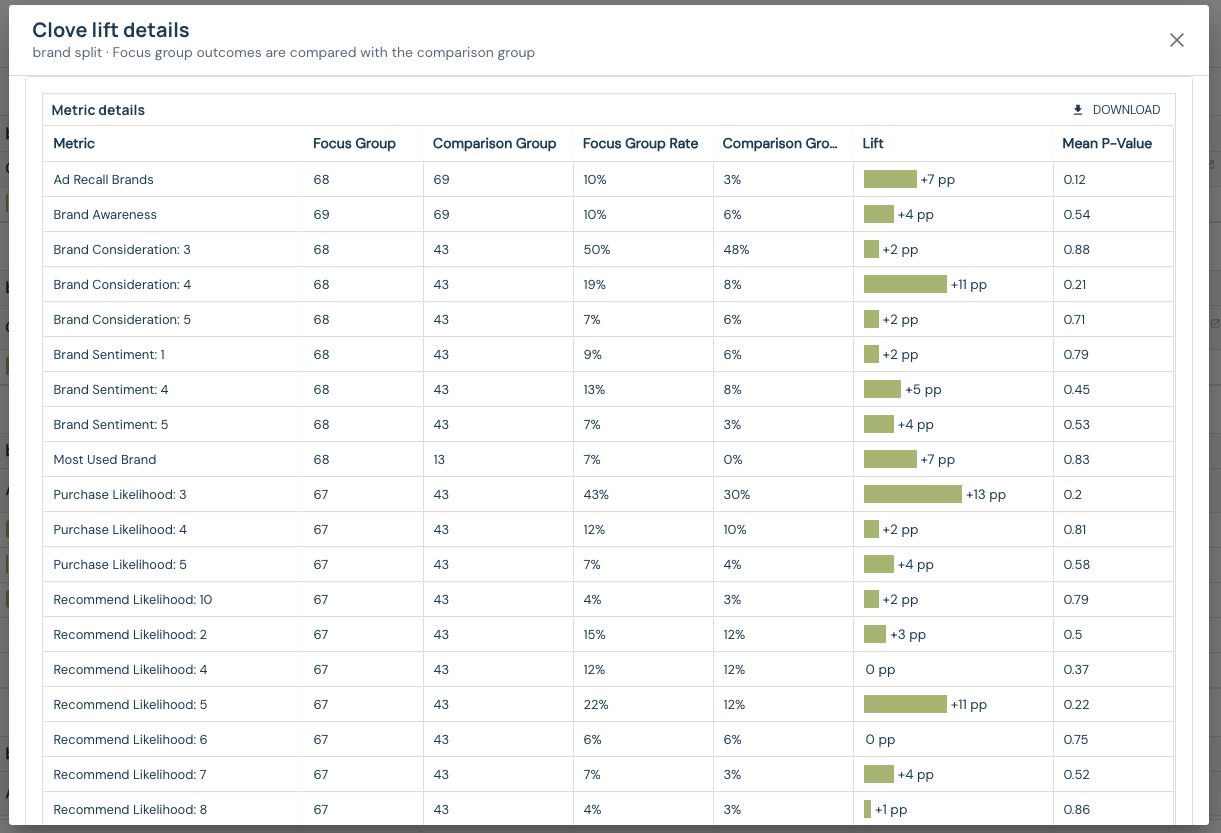
Compare awareness, consideration, favorability, purchase intent, and ad recall between exposed respondents and matched controls. See the differences alongside significance tests.

Incrementality

Use a test-and-control design to estimate incremental changes in brand outcomes. Randomized designs support stronger causal claims; matched exposure studies can retain confounding. Feasibility depends on campaign reach, sample size, and the effect you need to detect.

Audience feedback

Ask both groups what they remember, which messages they understood, and what they associate with the brand. Open-ended responses are coded into themes, including feedback from people who never clicked.

How brand lift studies work

1. Define exposure

Choose how to identify exposure: random assignment to a stimulus inside the survey, matched ad-server records, or reported exposure. Specify the control group and matching variables before fielding.

2. Field continuously

Recruit respondents through 70+ integrated panels with real-time fraud and attention checks. Set the fieldwork schedule around campaign reach and the sample needed for each comparison.

3. Review the results

Weighting, matching, and significance testing run automatically as responses land. Lift is reported with statistical results your analysts can inspect, and reports can be drafted using your branding.

The full method — treated-group definition, control construction, computation, and the strength of causal claim each design supports — is public in our lift measurement methodology. Pair campaign measurement with creative testing before launch and check your campaign's measurability before you field.

Common questions

What is a brand lift study?

A brand lift study compares awareness, consideration, favorability, intent, and ad recall between respondents exposed to a campaign and a control group. The difference is reported as lift, with significance testing. Whether it supports a causal claim depends on the study design: matching alone does not remove all possible confounding.

How is incrementality testing different from attribution?

Attribution assigns credit for conversions to observed touchpoints. Incrementality testing uses a control group to estimate what would have happened without the campaign. Survey-based brand lift measures brand outcomes such as awareness and intent, rather than tracked conversions. Exposure may still be identified through ad-server records, and causal claims depend on how the study assigns or identifies exposure.

How fast do results come back?

Results update as responses arrive, with weighting and significance testing applied automatically. Fieldwork can take hours to days, depending on the audience and required sample. Wait for enough exposed and control respondents before using the results to make campaign decisions.

Is the methodology auditable?

Yes. Our lift measurement methodology documents exposure definitions, control matching, lift calculations, significance testing, and the claims each design supports. Your analysts can review the method and its limitations before the study starts.

Plan your brand lift study.

Define your audience, exposure data, and the brand outcomes you want to measure.