Can we add custom questions to individual waves?
Yes. You can program additional questions alongside the core tracker, including routing and validation. Additional questions can increase survey length and affect the quote.

Brand tracking
New waves bring new questions, programming changes and another round of reporting. Keep your core tracker, add questions for the next campaign or category issue and bring the waves together in the MX8 Labs Research Platform.
Add questions for a new campaign or category issue alongside your regular brand measures, with custom routing and validation.
Keep the surveys in one project and add new waves to the multi-wave reports you already use. Choose clear labels and compare waves through rows, columns and filters.
Repeated open-ended questions in the same project automatically share a coding frame, so your comparisons use consistent categories.
Reuse the agreed report definitions and export formats as the series grows, so each wave fits the client's established reports.
Every wave means revisiting tables, aligning labels and checking comparisons before reporting to the client. Add the new survey to your existing multi-wave reports to bring the results into the same definitions and coding frames. Your researchers check AI-generated outputs and interpret what moved and which audiences changed.
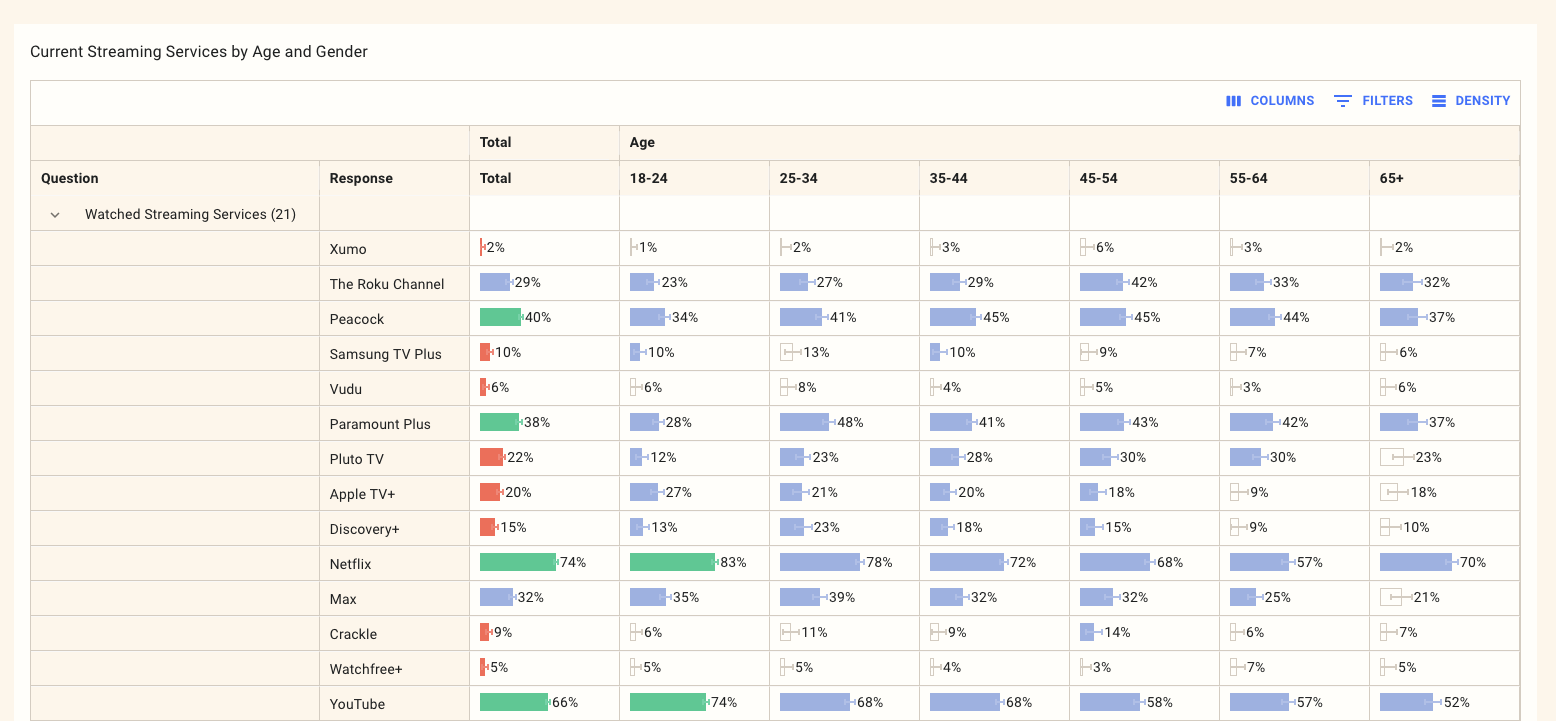
Example report comparing responses by age. Use wave labels in this reporting view to compare tracker results over time.
Multi-wave reportingStart with the current questionnaire, sampling approach and reporting requirements. Map the measures you want to preserve, review the programmed survey and plan a bridge study where continuity matters.
Discuss your trackerReview the questionnaire, sample and quota specifications, weighting approach, report definitions, and historical data you are permitted to use. Keep proposed additions and removals separate from the measures supporting the historical trend.
Bridge with comparable audiences, quotas, fieldwork periods and overlapping questions. Differences in wording, mode, sample or weighting can change results; document the comparison before joining the series. A bridge study cannot guarantee that every measure remains comparable.
Track unaided recall and aided recognition separately, using consistent questions across waves.
Compare category-relevant attributes associated with your brand and competitors, including differences by segment.
Follow awareness, consideration, preference and usage over time. Keep audience definitions and core questions consistent when investigating movement.
For campaign-specific exposure comparisons, use brand lift. Wunderkind's case study describes its broader research program growing from two annual anchor reports to 24+ surveys by August 2025.
Yes. You can program additional questions alongside the core tracker, including routing and validation. Additional questions can increase survey length and affect the quote.
No. Add the new survey to existing multi-wave reports within the same project. Reports refresh with the selected surveys included, and you can use wave labels as rows, columns or filters.
Yes. Review the questionnaire, sample and reporting definitions before moving. A bridge study can help investigate the effect of the change; continuity needs to be assessed for your study.
Keep a consistent core of unaided and aided awareness, consideration, preference, usage, and relevant brand associations. Review additional questions and changes for their effect on those core measures.
Choose a cadence around the decision, category, recruitment feasibility and budget. Plan enough respondents for each comparison, then price the full year of waves. More frequent waves can mean more sample and a higher annual cost, even when production takes less time.
Quotes depend on survey length and respondent count, with no per-seat or feature fees. Include bridge-wave sample and the sample required for recurring waves; data ingestion carries additional fees where used. Agree the scope and quote before fielding.
Choose the measures, sample and schedule your team needs.